A Road Trip from Chengdu to Qinghai Lake
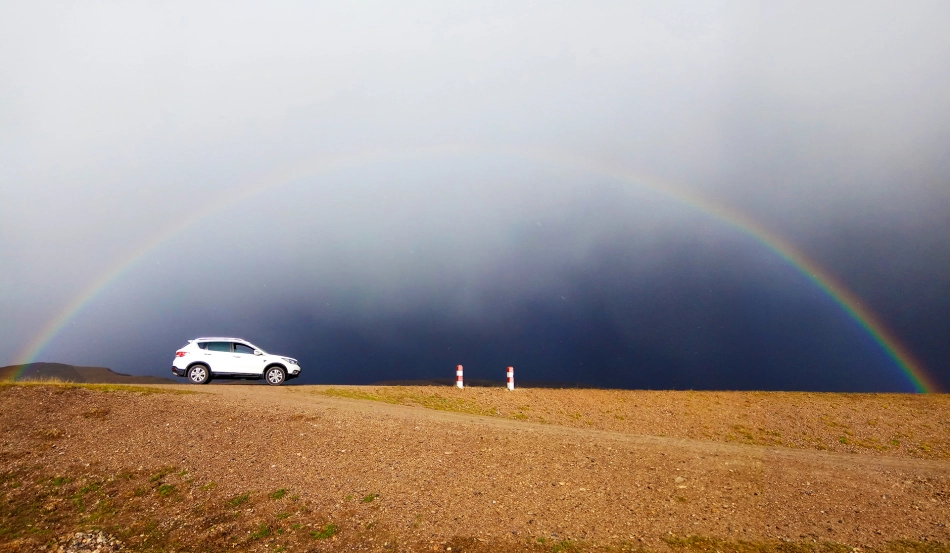 Cover photo: A rainbow encountered in Zoigê
Damn it! Driving through the Zoigê grassland, the whole stretch was under interval speed monitoring, making me drowsy. The car was barely going 60 km/h, wind pouring through the open window with a slight chill. In the rearview mirror, the sun was dipping below the mountain ridge, its afterglow gilding the distant clouds with a dazzling golden rim.
“Nah, let’s just take a break!” Signal, slow down—I pulled over in front of a line of parked cars. A few people stood by the roadside photographing the sunset, while out on the distant pasture, some tourists were riding horses. Zhang Erwa got out and, as usual, lit up a Lanzhou cigarette. I stood at the roadside watching two lazy Tibetan mastiffs.
Tomorrow we arrive in Chengdu, and this trip ends. After leaving Xining, we skipped every attraction, stopping only for gas and meals—after all, we’d already seen enough mountains, water, clouds, grasslands, sheep, and yaks over the past two days that nearly identical scenery could no longer stir our interest.
Departure
On the evening of October 1st, I had set off on this journey full of anticipation. Zhang Erwa said he had a cold and couldn’t handle the high altitude, but he’d accompany me as far as Lanzhou, then take a train back to Chengdu while I headed west to Qinghai alone.
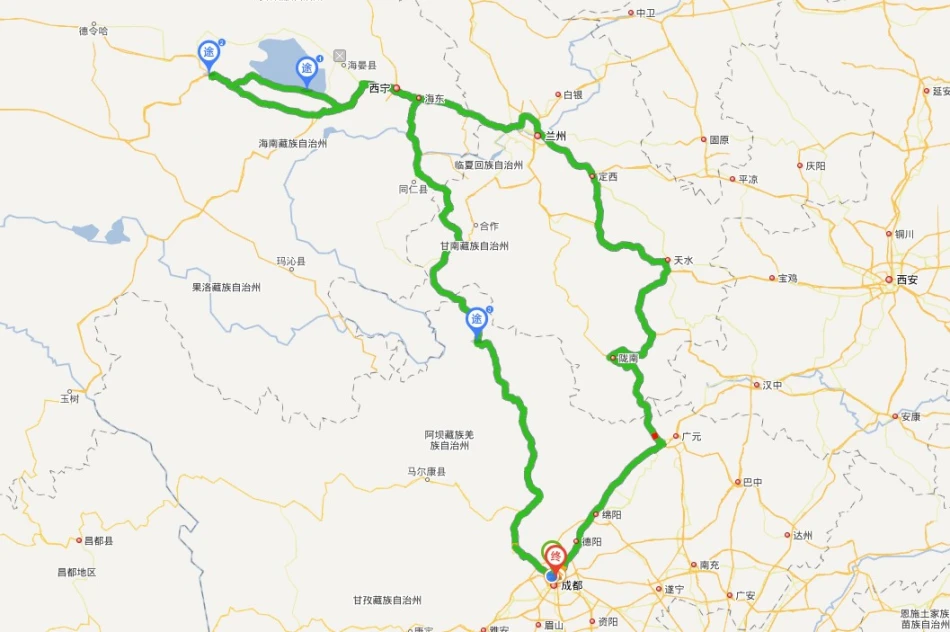 Figure 1: Travel map
It was always going to be a lonely journey. I set aside 5,500 yuan spread across three bank cards in different locations—one in my wallet, one in my backpack, one in the car’s toolkit—just in case I got robbed or lost everything and ended up penniless. Given the uncertainties during the National Day holiday, we might end up sleeping in the car, so I put a blanket in there and told Zhang Erwa to bring one too. Besides toiletries, I also packed a folding bicycle and a few clothes, nothing more.
The plan was highways on the way there, back roads on the way back. I didn’t dare drive back roads at night, but I liked night driving on highways: fewer cars, easier driving—all you need to do is pick a car going about the same speed, keep your distance, follow its taillights and the lane markings, and you’re good. We left Chengdu at 10:30 PM, sat in traffic on the Jingkun Expressway for an hour, didn’t switch to the Lanhai Expressway until 1 AM, stopped at a service area to add 100 yuan of fuel and rest a bit. That service area was full of small cars parked overnight. Through foggy glass, I could see a sleepless driver scrolling on his phone. I washed my face, smoked a cigarette, and got back on the road. We planned to spend the night in Lanzhou on the 2nd, so we had to reach the Longnan area tonight.
Night in Longnan
After a second cigarette, we arrived in the Longnan area at 4 AM. I didn’t want to drive anymore, so I pulled into a service area to overnight. Perhaps because this service area was the midpoint between Lanzhou and Chongqing, it was packed with cars spending the night. It was overflowingly full—only spaces right next to the traffic lanes were available. I parked in front of a big truck, figuring if any late-night driver accidentally careened into the service area, those trucks would shield me.
We only rested four hours. Zhang Erwa made full use of those four hours to snore thunderously, while I managed about two hours. Between the noise, the light, and having smoked two cigarettes while driving at night, sleep was impossible.
I’ve always only used cigarettes as a stimulant—for example, one cigarette during an all-nighter when I’m groggy clears my head. So on a long night drive, I’d have one. Zhang Erwa had a smoking habit too; every time we stopped, he’d automatically light up.
I asked him if he was addicted. He answered:
“I smoke when I’m bored, but I could also not smoke.”
“Then why smoke when there’s nothing to do! Wait till you’re addicted and it’ll be hard to quit.”
At eight in the morning, I pulled the sunshade off the windshield. The car next to us had already left. I woke Zhang Erwa to get going, then took my face wash to the public restroom. I used to think washing up in a public toilet was a bit decadent and couldn’t accept it. Later, at Hanoi Airport, I saw a Westerner washing his face with hand soap and realized my thinking was too constrained. First, making yourself comfortable is important. Second, hand soap isn’t only for hands, and face wash isn’t only for faces. The skin on your hands, face, and head is all the same—why can’t you mix and match? So later, in unavoidable situations, I’ve used hand soap to wash my face in KTVs and at the office. In a Lanzhou hotel, I also used my own face wash to wash my hair.
After washing up, passing through the uninteresting Longnan and the dust-choked Tianshui, we headed straight for Lanzhou!
Lanzhou
Every folk music fan has a few unique cities and places in their heart: Wan Qing’s Shijiazhuang and Hebei Normal University High School, Li Zhi’s Nanjing and Rehe Road, Zhao Lei’s Chengdu and the Little Bar. Passing through Dingxi, I listened to Li Zhi’s “Dingxi”; arriving in Lanzhou, I thought of Dikusheng’s “Lanzhou, Lanzhou,” and those youthful dreams and the White Pagoda.
Lanzhou is a very elongated city, built along the Yellow River, flanked by mountains on both sides. Its layout is similar to Panzhihua—equally long, equally monotonous. The eastern end is the urban area, the western end is a massive petrochemical plant and industrial zone. Chengdu’s Pengzhou Petrochemical is nothing compared to Lanzhou Petrochemical—it’s a whole different scale.
Lanzhou’s most famous landmark is the Zhongshan Iron Bridge over the Yellow River, built by Germans in 1909. The bridge deck isn’t wide and doesn’t allow vehicles; after a century, it still serves as a pedestrian walkway. On the bridge, some Muslim vendors sold fried rice cakes and various Yiwu trinkets in the light rain. I wanted to buy some fried rice cakes but wasn’t confident about Lanzhou’s rainwater, so I gave up the idea. Below the bridge, the Yellow River rushes toward the sea—not as wide as I imagined, with turbulent, muddy waters that only a madman would want to jump into. Walk across the iron bridge and you reach the famous White Pagoda. I wasn’t very interested in these man-made attractions, and with the rain falling, I suggested taking a new route to find snacks.
To this day, we can still remember the delicacies of our childhood, because taste is the most memorable sense—it lies dormant in memory, never fading. You’ll inevitably stumble upon it in memory’s general store and reminisce. You’ll recall the surroundings when you ate, the words spoken by those around you, the smiling faces and warmth. If a city has roots, culture is its roots; if a city has a soul, food is its soul. A city without good food is unhappy; a city without good food cannot stir a traveler’s memories.
Every time I pass through a city, I deliberately seek out local street food. The biang biang noodles, Hulatang soup, and lamb stewed bread on Xi’an’s Muslim Quarter; Nanning’s Zhongshan Road laoyou fen, fen jiao, and grilled saury; the highland barley wine I drank beside Lhasa’s Lhalu Wetland; the pho with mint leaves by Hanoi’s Hoan Kiem Lake; the crossing-the-bridge rice noodles near Kunming Railway Station; the steamed pig trotters in Chuxiong’s Guangtong Town—every one of these delicacies left a deep impression, every scene carrying a hundred flavors. So in Lanzhou, I was determined to leave its taste memory behind.
At the Zhengning Road Night Market, there were roujiamo, bamboo rice, hand-grabbed rice, blood sausage, lamb offal soup, tianpeizi… The most unforgettable was the milk, egg, and fermented rice wine concoction. Zhang Erwa and I stood in line in the drizzling rain to buy two cups, then carried them through the shoulder-to-shoulder snack street, took shelter under the eaves of another street, and started eating by the roadside. I took just one bite and blurted out: “Holy crap! This flavor is incredible! Does Chengdu have this?” Egg, fermented rice wine, and milk, heated and mixed together—every flavor danced on the palate! It was so good that we dove back into the snack street for more. After trying blood sausage with lamb soup, I drank half a cup of tianpeizi—yet another indescribable delight. I deeply regretted having eaten a big bowl of lamb noodle slices that evening.
Later, back at the hotel, I inexplicably lit a Lanzhou cigarette and had a solid sleep. The next morning, we ate a bowl of beef noodles at the hotel entrance before setting off.
Before going to Lanzhou, a classmate told me I absolutely had to try Lanzhou lamian. I didn’t even bother correcting him—Lanzhou lamian is typically run by people from Hualong, Qinghai, while Lanzhou’s real specialty is beef noodles. Although both are pulled noodles, Lanzhou beef noodles and Lanzhou lamian differ not only in taste but also in how they’re eaten. When eating Lanzhou beef noodles, you typically order several small side dishes—pickled cabbage with onion, garlic-flavored cowpeas, bean sprouts—dozens of options available. Although the beef noodle broth itself isn’t particularly rich, picking up a few side dishes with each bite of noodles transforms the flavor in countless ways.
Qinghai Lake was within reach. I asked Zhang Erwa: continue west or head south back to Chengdu? He decided to press on.
Kumbum Monastery (Ta’er Si)
From Lanzhou to Xining is over 200 kilometers; from Xining to Qinghai Lake is another 100-plus kilometers. We set off early, bypassing Xining entirely, planning to stay by Qinghai Lake that evening.
It was already noon when we passed through Xining. I asked Zhang Erwa: since I’d already been to the Potala Palace and Jokhang Temple, I had no mystique left for Tibetan Buddhism and monasteries; but you’ve never experienced it, so are you interested in visiting Kumbum Monastery? He said since we were here, we might as well drop by. So, 200 meters before the fork for Qinghai Lake and Ta’er Si, I made a detour and improvised a visit to the monastery.
Over a pass, you can see Kumbum Monastery in its entirety. We couldn’t even find a place to park around the monastery, so we ended up driving a loop on the one-way road surrounding it and then drove straight on toward Qinghai Lake.
I’ve never liked making detailed travel plans or reading guidebooks. Reading someone else’s guide strips the journey of its sense of awe and the mystery of distant scenery. Following in someone else’s footsteps turns travel into a verification exercise—like doing a math problem, checking your answer against someone else’s solution. You know what the next spot looks like before you get there. How boring. Travel from the heart—what you see is meant to be, what you miss, you don’t dwell on.
The road from Kumbum Monastery to Qinghai Lake crosses a pass at 3,800 meters elevation. The mountaintop was shrouded in mist and clouds. I drove carefully, afraid of any accident. I thought of similar roads I’d traveled before: Baima Snow Mountain in Shangri-La, the mountains from Xichang to Ningnan, the mountains from Panzhihua to Yumen. Whether riding in someone else’s car or driving myself, I could only feel the insignificance of life.
Qinghai Lake
In 2013, on the train back from Lhasa to Chengdu, I caught a fleeting glimpse of Qinghai Lake. From that moment, it became a place that haunted my dreams. I swore I’d see it again, which is exactly why this trip existed.
When we arrived at Qinghai Lake, the sun was setting. The lakeside road was hundreds of meters from the water’s edge. From a distance, the lake stretched boundlessly, its surface calm, a vast emerald green. After that first glimpse, we drove over 20 kilometers along the lakeside road and found a small guesthouse one kilometer from the shore where we booked a standard room. It was already dark, everything dim around us. Without even dropping off our luggage, we eagerly drove another 10 kilometers to the closest point to the lake, found a gap in a fence, and squeezed through. Qinghai Lake, I’m finally here! I was so eager to reach the water that I actually broke into a jog. But after only a few hundred meters, my heart started racing and I was short of breath—I suddenly remembered this was a plateau over 3,200 meters above sea level! I slowed down, and Zhang Erwa and I leisurely walked to the lakeside together.
At this point, there was still a faint afterglow in the distant sky, while the nearby lake was hidden in darkness, nothing visible. Having come all this way, I had to taste the water! I cupped some lake water from the rolling waves, took a sip, and immediately spat it out. It was salty, but less so than seawater, and not as bitter. I doubt the fish here would be sold as freshwater fish! After tasting the water, we stood for a while and then headed back. At a Xinjiang restaurant next to our guesthouse, we ordered a jin of local Gong mutton, a plate of chive scrambled eggs, and a dish of stir-fried beef. Zhang Erwa doesn’t like the gamey smell of lamb and stopped after a few bites. I couldn’t finish a jin of mutton, so I packed it to the hotel and suggested opening a bottle of baijiu to finish the lamb and get thoroughly drunk. Wine ready, meat spread out—I remembered you shouldn’t get drunk on a plateau, and someone with a cold definitely shouldn’t try. Forget it, we’d deal with the lamb tomorrow.
I turned on the electric blanket and fell into a fitful sleep. I dreamed of things I couldn’t hold onto slipping away, and woke up to the sound of Zhang Erwa’s earth-shattering snoring. Ultimately, I barely slept all night. The next morning, I groggily opened my eyes, pulled back the curtains, and looked outside. The sun was blazing, the sky was cloudless, washed in brilliant blue, and the lake surface a kilometer away was a dazzling blue. We’d missed the sunrise, but we couldn’t waste the beautiful scenery. I woke Zhang Erwa up—get up, let’s go see the sights!
The car had frozen overnight outside, and a thin layer of ice had formed on the glass. After scraping it off, we set off, driving along the shoreline with the “warm” sun at our backs—at least I thought it was warm at the time. The lakeside road was flat and straight, often with no curves for seven or eight kilometers at a stretch. The grasslands on either side had already turned yellow, and sheep and yaks scattered lazily across the fields, grazing on withered grass.
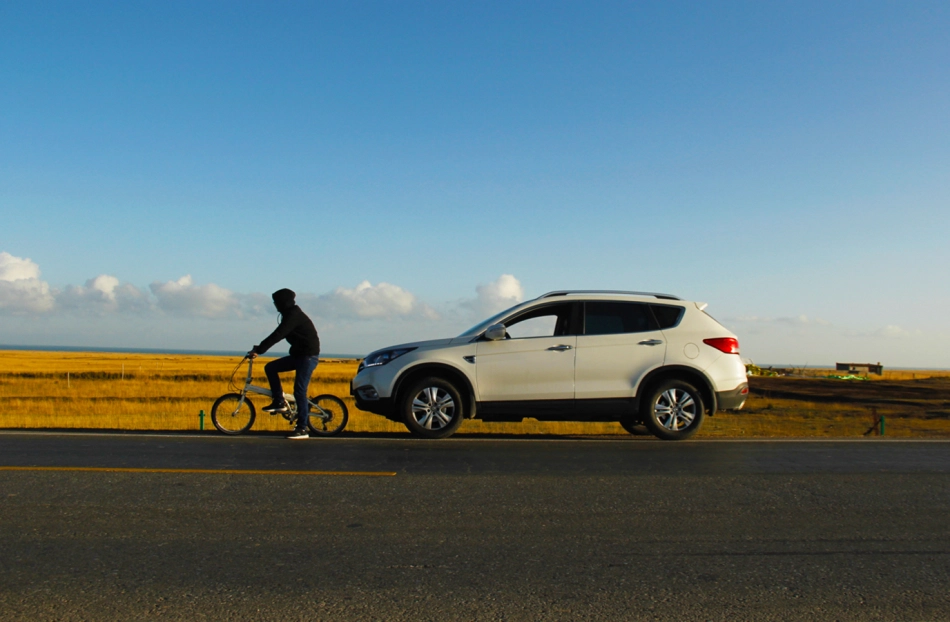 Figure 2: Posed by Qinghai Lake, the lake in the distance, herders’ enclosed pastures in the foreground
The herders along the lake had fenced off the entire shoreline—you had to pay to get to the water. Fortunately, it wasn’t expensive: just 20 yuan to drive right to the lakeside and run wild. We paid and drove straight to the water’s edge.
Qinghai Lake was as vast as the ocean, where sky met water. A gentle breeze rippled the surface, and waves gently lapped against the sandy shore with a pleasing sound. Clouds on the horizon lay like cotton candy across the distant skyline, drifting slowly, as if deliberately slowing time. Occasionally, a few birds swept freely across the lake and then climbed skyward. Everything was beautiful, filling me with joy. I love the sea, love boundless scenery, and would even be willing to become a lighthouse, standing eternally between sea and sky.
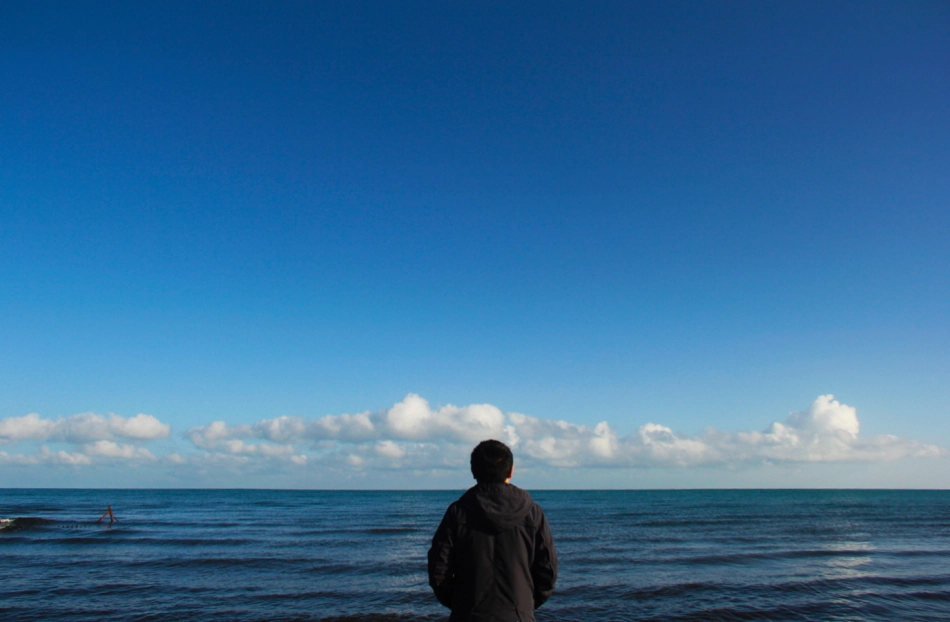 Figure 3: The vast Qinghai Lake
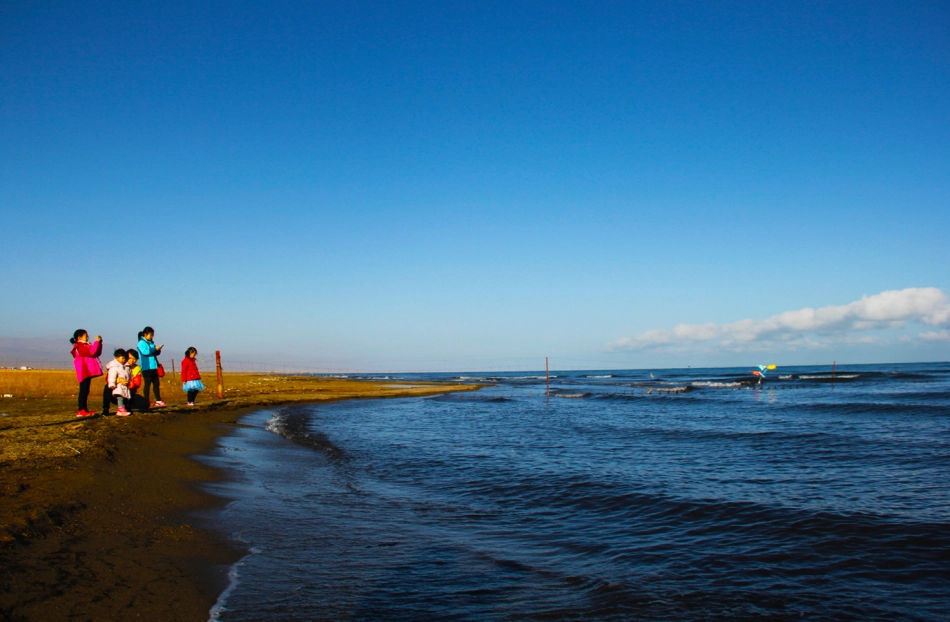 Figure 4: A big family from out of town
No matter how beautiful the scenery, you can’t take it with you. After spending some time by the lake, I finished last night’s leftover hand-grabbed lamb by myself, took some photos, and told Zhang Erwa to get ready to leave. Between the lake and the road was a meadow hundreds of meters wide, with a small ditch winding through it. A Tiguan L was parked across the ditch in the meadow, showing off. For a few seconds I wanted to drive through the ditch the same way, but quickly dismissed the thought—a front-wheel-drive car traveling alone, getting stuck in a ditch would be trouble.
After crossing the makeshift bridge over the ditch, I found that Tiguan L had already gotten stuck and couldn’t move. It was a Shandong-registered car, the owner a young guy in his twenties. I drove up to him and said he had guts, driving a two-wheel-drive car like that! Did he have a tow rope? I’d help pull. He said it wouldn’t work—a four-wheel-drive Land Rover had tried and snapped the rope without budging the car. Before leaving, the young mom in their car asked if I could let their kid change out of wet clothes in my car. I agreed.
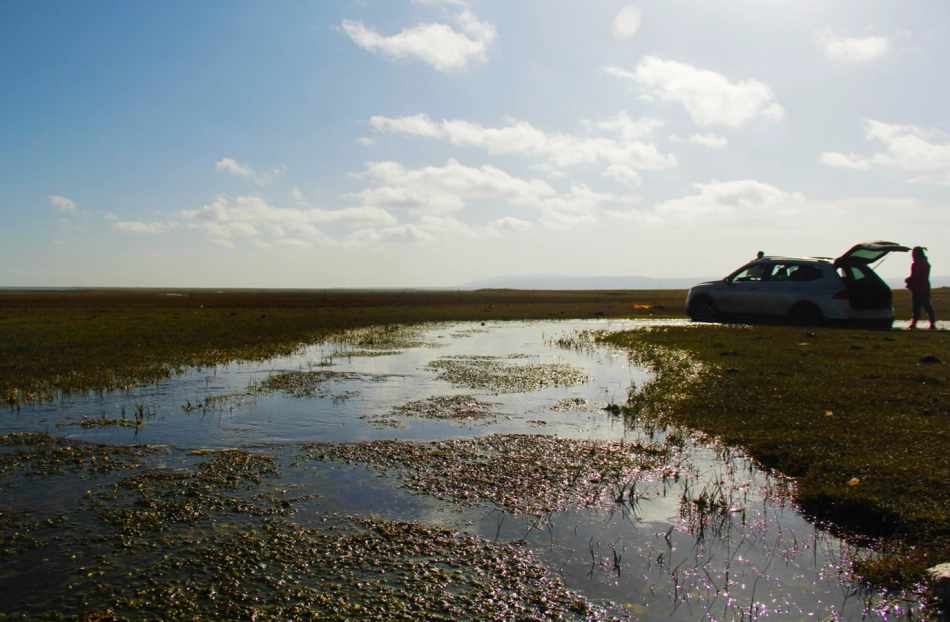 Figure 5: The car stuck in the ditch
Chaka Salt Lake
Continuing west along the lakeside road, we came to a T-junction. Left was Chaka Salt Lake, right was Bird Island. I asked Zhang Erwa again which way. He said, since we’re already here, let’s check out Chaka Salt Lake. So we left the Qinghai Lake loop road and headed toward Chaka.
On the way to Chaka, the road was straight, visibility excellent. You could see the scenic area from far away, yet we still drove another 25 kilometers before arriving. “Looking at a mountain kills a horse”—the old saying couldn’t be more accurate.
Chaka Salt Lake adult admission was 70 yuan. The parking lot had cars from every corner of the country, and the scenic area was packed. I figured there’d be nothing but salt and a 100% saturated sodium chloride solution—not much fun—and I was right. The only real enjoyment was taking “MUJI-style” photos. But with the place packed and the lake surface rippling, nobody was going to pull off those shots.
The salt lake was the last stop of this trip. I scooped up a bottle of salt from the lakebed to take home.
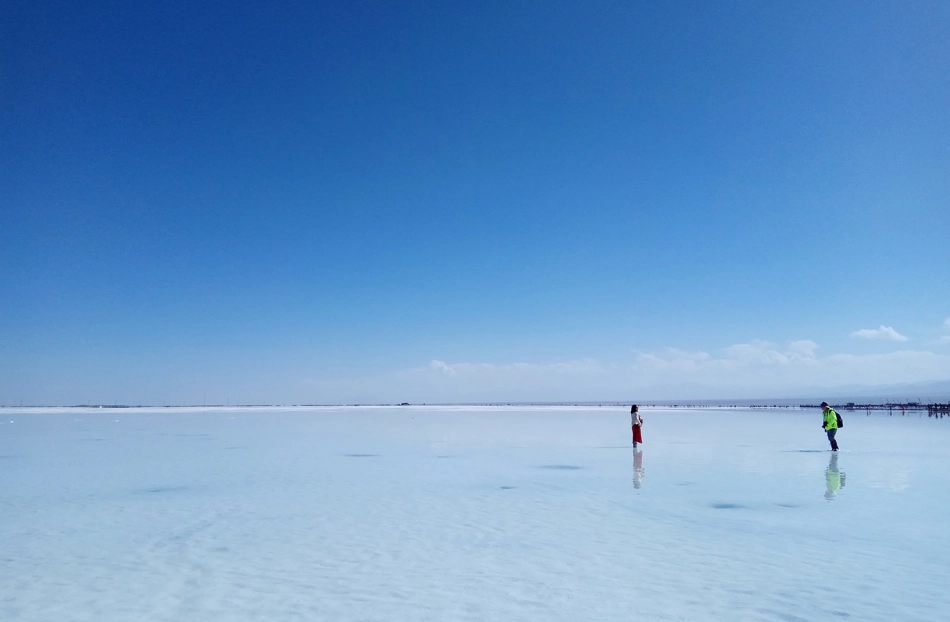 Figure 6: Chaka Salt Lake’s Mirror of the Sky
Jingzang Expressway
Originally, we planned to return the same way from Chaka Salt Lake to that T-junction, then head north through Heimahe to Bird Island, and loop around the north side of Qinghai Lake back to Xining. But we’d spent too long at the salt lake, and completing the full loop was no longer realistic. “Next time, I’ll come with my wife and kid!” I said, and casually got on the Jingzang Expressway back to Xining.
The Jingzang Expressway felt very American-style: four lanes total, two in each direction, separated by a grassy median over 10 meters wide. At intervals, there were cattle and sheep crossings, and occasionally I’d spot a yak leisurely grazing in the median. Running parallel to the expressway was a national highway—two lanes, one in each direction. If not for the lack of guardrails, it was indistinguishable from the four-lane expressway. More than once I marveled at how having space like this lets you be extravagant, feeling like I was speeding along a Texas highway!
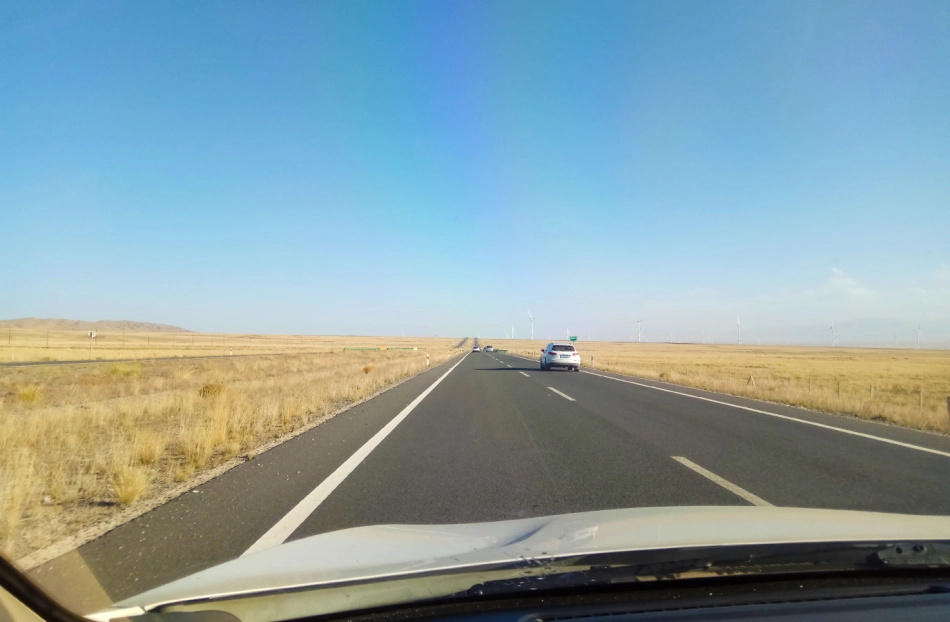 Figure 7: Jingzang Expressway
Xining
Either China is too small, or Sichuan is just too close to Qinghai! After posting on WeChat Moments, several friends said they were also in the area: a glass bottle supplier, a former colleague, a high school classmate… they were all here! Just missing my ex-girlfriend, I thought. The supplier even complained we didn’t communicate enough on ordinary days and wanted to meet up and discuss cooperation! Fortunately, I managed to dodge that later.
The former colleague was a girl from my hometown. She was traveling Qinghai Lake with her best friend and invited us to dinner in Xining. I said time might be tight—tell them to eat first, and we’d meet for a late-night snack. We arrived in Xining at 9 PM. We had many mutual colleagues, so staying at the same hotel wouldn’t be appropriate. To avoid any awkwardness, I booked a hotel elsewhere.
How do weary travelers form an impression of a city? Seemingly nothing works except food. Exhausted from the journey, we were starving and desperately needed a feast to welcome us. I invited my colleague to discover Xining’s soul with us, but she was so full of hand-grabbed lamb she couldn’t move. Fine! We’d go on our own.
Zhang Erwa and I hailed a taxi to Mojia Street Night Market. The driver said it was probably too late—the stalls might have already closed down. I said no worries, let’s go see.
Arriving at Mojia Street, it was deserted. Only a few restaurants were still open—clearly Xining’s nighttime scene had no soul. After a fruitless walk up and down the bare street, we ducked into the busiest spot, “Ma Zhong Shi Fu.” Ma Zhong Shi Fu had the kind of faux-ancient decor you see everywhere across China—unremarkable at first glance, but once inside, it was a whole different world, like entering the Grand View Garden.
Xining’s soul was actually here! The modest-sized hall was densely packed with countless delicacies displayed on all sides, like a university cafeteria. The ingredients boiled down to four: lamb, beef, potatoes, and noodles. Despite Zhang Erwa complaining about eating too many noodles along the way, he contradictorily went and bought a bowl of beef noodles and started eating—his body was honest enough. I didn’t want noodles either, but seeing a sign reading “Qinghai Special Ga Mianpian (small noodle pieces),” I was curious about what made it uniquely Qinghai and bought a bowl. Just as I sat down, I saw someone bringing out a plate of dark stir-fried noodles from the “Fried Potato Niangpi” window. What was niangpi? I had to investigate. I put down my chopsticks and immediately went to queue for a plate!
Two dishes laid out before us—enough even for a sumo wrestler! Let’s dig in. I tasted each one, and they were indeed good—flavors I’d never tried before. So good! So good! In the midst of my delight, I heard the beautiful woman at the next table praising the handmade yogurt! Fine! I went and bought a yogurt too—the taste was excellent!
Only a true petty person can watch others eat without craving; a real man eats heartily! After Zhang Erwa finished his noodles, seeing others drinking lamb soup so enjoyably, he went and bought a bowl, dipped a piece of baked bread in it, and wolfed it down.
Eyes bigger than our stomachs—we were full before finishing. The fantasy of tasting all of Xining in one night was futile. I mumbled: “Special steamed dumplings, Ma Zhong baozi, lamb skewers, lamb soup, cold noodles—I haven’t tried any of these! I want the milk egg fermented rice wine again; Zhang Erwa, you really don’t want to try the yogurt?”
“Not eating it. Nothing beats Baotou’s yogurt!” Zhang Erwa declared.
“Alright!” I said in the tone of Yu Qian, resigned. “A few more skewers then?”
“Sure!”
Xiahe
The return trip was on back roads, but still wide enough. From Xining, we passed through Haidong and Jianzha, took a stretch of provincial road, entered Gannan Prefecture in Gansu, got on National Highway 213, and arrived in Xiahe County. It was noon by the time we reached Xiahe, our stomachs growling. We drove along the county’s main road looking for a restaurant. There were a few small eateries but no parking spots, so we drove from north to south along the road until the end, where we found a massive monastery with crowds of tourists—clearly a popular attraction. Zhang Erwa said this was Labrang Monastery, a major national cultural heritage site. Gannan is a Tibetan area with many Tibetan-style monasteries and white pagodas, and Xiahe’s Labrang Monastery is the most famous. During the era of unified political and religious rule in Tibetan Buddhism, Labrang Monastery was the political center of the Gannan region and its largest Buddhist academy, hence its grand scale. Regardless of its heritage status, I had no interest in Tibetan Buddhism, and Zhang Erwa didn’t express any either. I casually drove past the attraction—it was more important to reach Zoigê tonight, so let’s find something to eat and continue south.
Past Xiahe, the landscape was all rolling grasslands and pastures. The road remained open, but the speed limit was 60 km/h, so we drove slowly. Zhang Erwa was hypnotized by the monotonous scenery. We’d already listened to the downloaded songs and crosstalk performances twice; they were now on mute. Feeling bored, I couldn’t help but think about some things from the past, and my mood sank. I pulled over, told Zhang Erwa to get out for a smoke, closed the car door, and walked deep into the grassland.
A small stream wound through the grassland, its water murky. A lone yak stood drinking further upstream. In the distance, prayer flags fluttered in the wind, covered with scriptures—each gust of wind counted as a recitation. I wished I could write my mood on those prayer flags too.
 Figure 8: A stretch of road between Xining and Zoigê
Return Journey
On the way back, past Luqu County, there was the Nine Bends of the Yellow River, Zoigê flower sea, and Langmu Temple—we skipped them all. A stretch of road caught a brief rain shower, and the sky instantly cleared, a rainbow arching across the grassland. I got out to take a few photos, the car parked right under the rainbow. Above the rainbow, dense dark clouds rolled in like a wild beast. Zoigê is a small county town, nothing noteworthy, but its yak hotpot was as delicious as the ones in Chengdu. The next day, we set off at 10 AM and arrived in Chengdu at 8 PM, ending the trip.
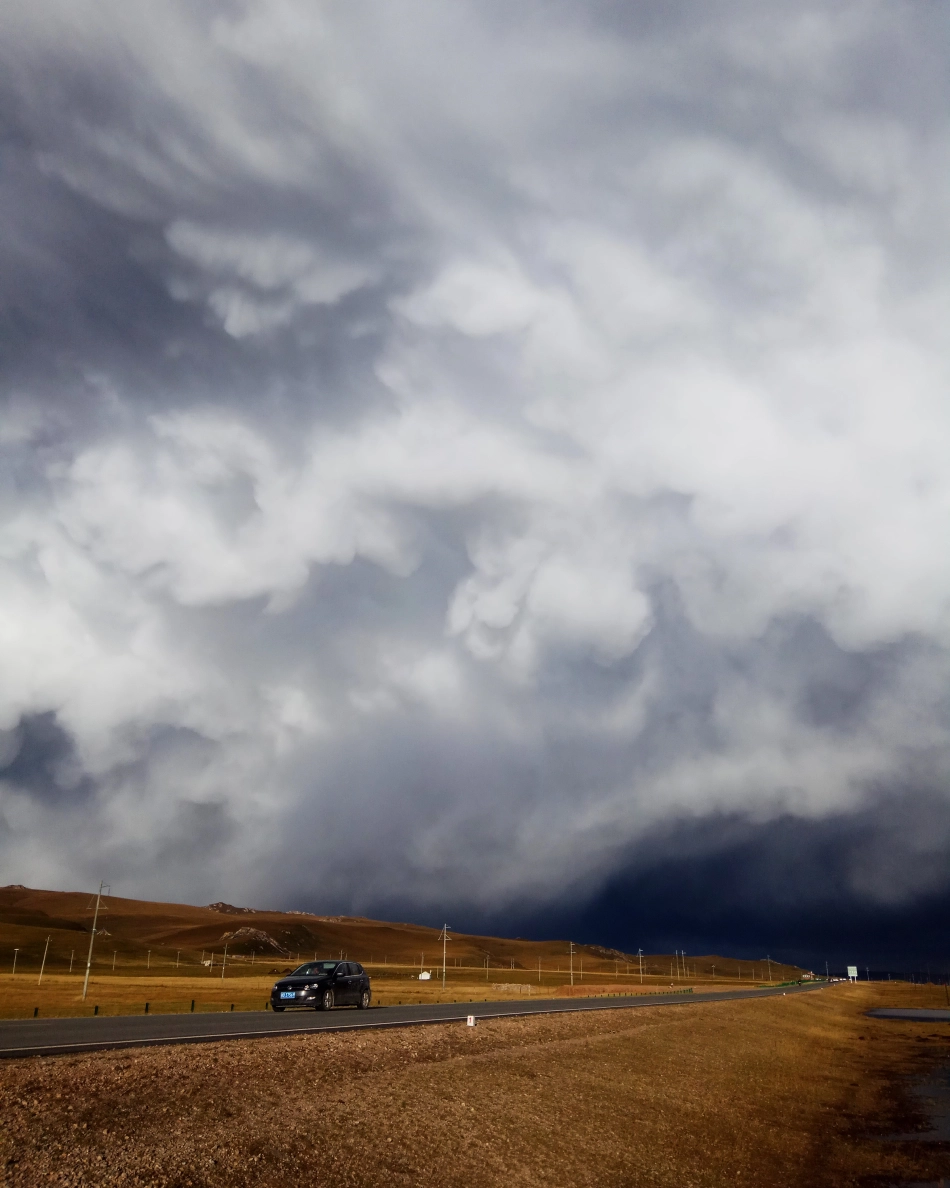 Figure 9: Rolling dark clouds near the Nine Bends of the Yellow River
I have to admit, the best scenery along the entire journey was on the road itself. The magnificence of water, the thrill of mountains, the depth of the sky, the vastness of the grasslands. The shock of dark clouds rolling in, the despair of feeling like a stray dog—I felt it all.
Zen and the Art of Motorcycle Maintenance says that traveling by car isn’t the best way to experience a road trip—you can’t feel the wind, rain, and temperature from inside sealed windows. I hope that many years from now, I can ride a motorcycle back to Qinghai Lake.