Let's Disappear from the Internet
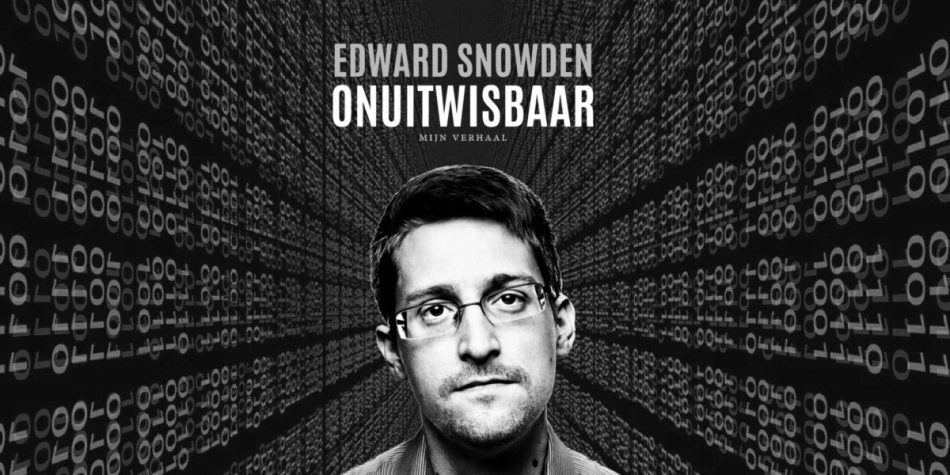
📷 Image caption: Edward Snowden, wanted by the U.S. since 2013 for exposing the “PRISM” program — a project involving deep surveillance of Americans’ real-time communications and stored data — to the media.
After reviewing all the websites I’d registered for, I ultimately gave up on Douban, Baidu, Facebook, and others. Even though there were many precious memories, it only took a single decisive moment to delete them all. After deleting my accounts, I didn’t feel lost or regretful — instead, there was a kind of liberating feeling, like “a small boat slipping away, entrusting the rest of my life to the rivers and seas.” All that messy past had finally dissolved into smoke.
Here are the reasons that drove me to make this decision:
First, deleting inappropriate posts and reshaping my personal image.
Perhaps due to youthful impulsiveness or thoughtless repetition of popular opinions, I had casually posted some biased evaluations and self-serving reflections on social media platforms. Looking back now, I break into a cold sweat. Not only do I find it absurd and ridiculous myself, but I also fear that friends, colleagues, and relatives would look askance, and my reputation could be ruined entirely. Better late than never — delete them quickly and be done with it!
Second, preventing doxxing and social engineering, protecting personal privacy.
The internet lets everyone speak freely, but it also lowers the moral standards that speech ought to carry. Keyboard warriors hiding behind screens place themselves above the law and verbally attack victims. Bored individuals follow social media IDs like breadcrumbs, cross-referencing to find real identities. Some even abuse their positions to pour fuel on the fire, directly exposing victims’ personal and family information, thrusting innocent people into the spotlight! Similar cases are everywhere. To protect ourselves, when posting online, we should avoid leaking personal information — including but not limited to location, job title, license plate number, and so on.
Third, the political climate is unpredictable — avoiding punishment for one’s words.
Although “freedom of speech” is written into the constitution, the government has no clear legal definition of the boundaries of citizens’ freedom of speech, and the general public has not reached a consensus on the rights of “freedom of speech” through broad discussion. Our government’s policy stability and continuity are not linear processes, and tolerance boundaries for “speech” vary widely. Grassroots enforcers go with the flow. What’s politically correct today might be illegal speech tomorrow.
After deleting some accounts, I created new anonymous ones. Anonymity isn’t about preventing arrest — it’s about preventing grassroots enforcers from abusing their power. China’s major websites are virtually all real-name systems where anonymity is impossible. If you misspeak, any grassroots official can find you.
Although most major foreign websites also require phone numbers now, for Chinese users, they’re still far safer than domestic sites. Unless top-level state agencies get involved, leveraging diplomatic channels, hacker techniques, or directly attacking foreign websites, an ordinary grassroots official could never simply obtain your personal information from a foreign site. To mobilize that level of international power against one person, you’d have to be someone like Snowden — it wouldn’t be just about saying a few bad words.
Some people worry about foreign websites stealing personal privacy, but it hardly matters. A distant country’s organization can’t easily cause us harm across borders — the people who harm us are always the ones closest to us. For example, Western politicians always attack Huawei for threatening national security and stealing personal privacy, but many ordinary Westerners dismiss it. The phones of average citizens don’t threaten national security, and it’s better than Apple, Google, and Amazon analyzing personal preferences for targeted advertising! By the same logic, it’s better for us to use Apple, Google, and Amazon than to be targeted by Baidu and Taobao ads.
Ultimately, I did an information split between domestic and foreign social networks: on domestic sites, I keep only a real-name Weibo account for browsing without posting; on foreign sites, I keep Twitter and this blog for long-form writing. These three platforms are enough to stay informed about domestic and international news and to share some thoughts.
How to be completely anonymous on foreign websites:
1. Get a foreign SIM card.
You can buy a Google Voice number or an international roaming card. I chose a Hong Kong Greater Bay Area prepaid SIM card. This card works normally in mainland China for browsing Google and Twitter, but its main purpose is receiving verification SMS from foreign websites. Since it can’t be replaced if lost, I basically never take it out — it just sits in an idle phone at home.
2. Register a ProtonMail anonymous email account.
This email service uses end-to-end encryption, its servers are in the neutral country of Switzerland, and it’s protected by Swiss privacy law. Registration doesn’t require a phone number.
3. Use the SIM card, email, and different avatars and IDs to register for the services you need.
For example, registering a privacy-protected domain, Twitter, servers, and a Hong Kong PayPal. PayPal can’t receive funds into it — you can only link your own Visa card for payments. I’m not doing anything wrong, so I’m not worried about PayPal leaking bank information. If you’re concerned, you can choose to pay for services with cryptocurrency.
After doing all of the above, your domestic and foreign accounts have almost no connection, and cross-referencing can’t reveal accurate information. You’re basically in an anonymous state.
Anonymity isn’t for speaking recklessly. When power has eroded the space for free speech, when threats and intimidation target personal expression, anonymity is simply about defending freedom of speech. When nationalism and mob violence suppress individual existence, anonymity is simply about ensuring personal safety.
Here are the practical results:
- In March 2020, Weibo leaked a large number of users’ phone numbers. But since I had bound a foreign phone number and had cleared my data, there was no impact.